
Currently, sustainable packaging is no longer an option, it has become a strategic requirement for brands operating in the European market, seeking to reduce their environmental impact, to improve brand perception and respond to increasingly conscious consumers.
With the implementation of the PPWR (EU Packaging and Packaging Waste Regulation companies must rethink their packaging strategies to ensure compliance, reduce environmental impact and meet growing customers expectations. Therefore, today, companies across industries are transforming their packaging strategies to adopt more sustainable plastic packaging solutions that combine compliance with functionality, recyclability and eco-efficient manufacturing processes.
At ALCION, we support brands in developing innovative plastic packaging solutions aligned with PPWR principles, combining ecodesign tips, materials optimization, recyclability, logistics efficiency and regulatory compliance to reduce waste and improve product sustainability throughout the entire packaging lifecycle.
Attending the PPWR considerations, we may say that sustainable packagingcan be defined by its ability to be fully recyclable from the design moment, to minimise material use without compromising performance, to incorporate recyclable raw materials (where applicable) according to standards and production processes that are aligned under a fundamental motto: the protection of the environment and the reduction of environmental pollution.
In a world with consumers increasingly aware of the care of the planet, brands have the challenge of maintaining the functionality of their products, reducing the environmental footprint to the maximum, and opting for more sustainable packaging.
The gaze of buyers is not only focused on the product they purchase, but also on the packaging that contains it and this ends up acquiring an important part of responsibility in the consumer's purchase decision.
The hyper-connected world in which we live has driven us to this new concern, because consumers want their favorite brands to opt for sustainable plastics and packaging in favor of the planet.
In this scenario, ecodesign, based on exclusively sustainable development and design strategies, has gained ground worldwide by promoting a new look at packaging in companies, based on reducing the impact at different stages of the life cycle of a package.
Besides, government policies have also made their contribution to minimize the manufacture and widespread use of single-use plastics and promote eco-packaging. The Spanish Law on Waste and Contaminated Soils, effective from 2022, implements green taxes on non-resusable plastic packaging.
Opting for ecological packaging has become the rule whose main target is to use materials that allow them to be maintained for a long time without exhausting resources or causing irremediable damage to the environment.
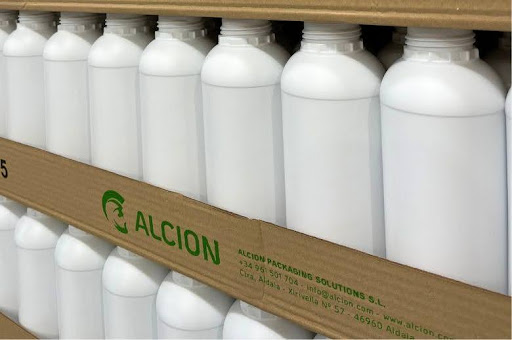
Today, companies can count on plastic containers made with recyclable raw materials, that is, they can be recovered and reused, like HDPE containers.
Recommended reading: Stackable plastic bottles: benefits, uses, and industrial applications
First of all, sustainable packaging is now a key competitive and regulatory factor in Europe. Brands must adapt not only to consumer expectations but also to increasingly strict legislation to strengthen their market positioning and customer loyalty.
In fact, modern consumers expect brands to demonstrate a genuine commitment to sustainability and environmental care. Businesses that fail to adapt risk losing relevance in increasingly eco-conscious markets.
In addition to improving brand perception, sustainable packaging helps companies:
This transformation is driving innovation across the entire plastic packaging industry.
Sustainable plastic packaging must contain certain criteria to meet its qualification as such, and to meet PPRW requirements. In addition, from the marketing point of view, you must know how to attract the customer and communicate the brand image of the company.
Some key principles for a sustainable packaging to be successful:
Firstly, optimized packaging designs reduce the amount of plastic used without compromising product protection or performance.
Lightweight packaging solutions help minimize waste generation and reduce carbon footprint and transportation costs.
Secondly, sustainable packaging should prioritize recyclable plastics such as HDPE, allowing materials to be recovered and reintroduced into the production cycle.
Using recyclable materials supports circular economy models and reduces dependence on virgin raw materials.
To continue with, production strategies must focus on reducing energy consumption, water use, minimising emissions and overall environmental impact.
Modern packaging manufacturers increasingly invest in energy-efficient technologies and sustainable production systems.
In addition, mono-material packaging solutions facilitate recycling processes by simplifying material separation and improving recyclability rates.
Besides, sustainable packaging must maintain product safety, preservation and usability while minimizing excess materials.
Ecodesign plays a fundamental role in achieving this balance between sustainability and functionality.
Finally, packaging solutions should comply with current environmental regulations such as plastic taxes and sustainability certifications and with PPWR requirements.
Certifications such as ISO 14001 demonstrate a company’s commitment to environmental management and continuous improvement.
As we can conclude, a sustainable plastic packaging takes into account factors involved in the economic, social and environmental care. Thus, manufacturing processes are intended to achieve efficient energy consumption, reduce water consumption, reduce raw materials, increase reuse and recycling, becoming in a short time actions that generate great advantages to the business.
Choosing a sustainable packaging, which is optimized, adapted to the product and that respects the regulations of environmental care, guarantees great benefits to companies, directly impacting sales, brand image and cost reduction. Let's look at it carefully.
The most important point of sustainable packaging is that it is environmentally friendly. If you do not contemplate the essential ideas of sustainability linked to the use of sustainable materials and manufacturing processes based on the care of the environment where they are extracted, we will not be facing sustainable packaging.
When companies assume their true commitment to the planet, not only with regulations, and are able to transform the look of the entire company to establish more sustainable processes, they have a huge impact on the environment, with the benefit of becoming an example that helps substantially reduce pollution.

The cost reduction of this type of packaging is not given by the use of recycled pellets. Unfortunately, and against to what public opinion may think, the price of this type of pellet is even higher than that of virgin pellets.
Opting for sustainable plastic packaging means reducing costs significantly since manufacturing companies in the plastic sector work on continuous development of packaging to reduce its weight. We will use less weight in each container and, therefore, less material. This weight reduction has a direct impact on the optimization of transport costs. It is also important to highlight the use and implementation of new technologies that promote the use of monomaterials, such as plasma fluorination as well as machinery with more sustainable behavior.
An indispensable condition is that sustainable packaging must return to the supply chain through its reuse-recycling, being an option for brands that seek to establish strategies based on giving a second useful life to their packaging.
Many studies and market research show that companies that decide to join the green revolution by using sustainable packaging in favor of the planet, are considered by customers as responsible and committed companies.
This increases consumer satisfaction and therefore provides a competitive advantage and brand image.
Using recyclable material allows to give a second life to the packaging and to have relevant certifications that enhance the brand image based on a real commitment to the care of the planet.
You may be interested in: Plastic container and packing line: how to achieve efficient integration
The sustainable packaging industry continues evolving rapidly through innovation, new materials and circular economy initiatives.
Some of the most important trends shaping the sector include:
To begin with, Mono-material packaging simplifies recycling processes and improves material recovery efficiency.
This trend is becoming increasingly important for brands seeking fully recyclable packaging solutions.
At the same time, manufacturers are increasingly using advanced design technologies to optimize packaging performance while reducing material usage.
Ecodesign methodologies help improve sustainability without compromising product protection.
Afterwards, companies are moving toward packaging systems designed for reuse, recycling and resource recovery.
The circular economy model is becoming one of the main drivers of innovation within the packaging industry.
Discover our intelligent solutions and start the path of environmental care with a strategic partner.
Moreover, at ALCION, sustainability is integrated into every stage of our packaging development process.
Our team works under some ecodesign patterns to optimize packaging structures, reduce material consumption and improve recyclability.
In addition, our sustainable packaging solutions are supported by ISO 14001 environmental certification, reinforcing our commitment to responsible manufacturing and continuous environmental improvement.
We work closely with customers to develop intelligent and sustainable plastic packaging solutions adapted to modern market demands and environmental challenges, logistics-efficient formats adapted to global supply chains.

In some way, PPWR forces plastic packaging manufacturers to review the design, and even redesign some packaging, so that it becomes 100% recyclable from conception, reduces the use of material and complies with circularity criteria.
This involves reviewing formats, materials, for example to focus on HDPE, and structures, to bring it to a structure as simple as possible, if possible monolayer, to maintain regulatory compliance without compromising the safety of the product.
Yes. Through eco-design and structural optimization, some weight can be reduced while maintaining key features, such as chemical resistance, stacking and transport. This requires specific engineering and many tests, because safety is still the basis, and must be able to comply with approvals as strict as those required by UN approval.
Mono-material packaging:
This is especially relevant in phytosanitary products, where recyclability is often limited by complex combinations of materials
Not necessarily. Recycled material can even be economically more expensive than virgin material.
The savings come mainly from the set:
Not from the direct cost of the raw material.
An optimized design allows:
All this can have an impact on reducing the CO2 footprint, which is key in high-volume industrial shipments.