
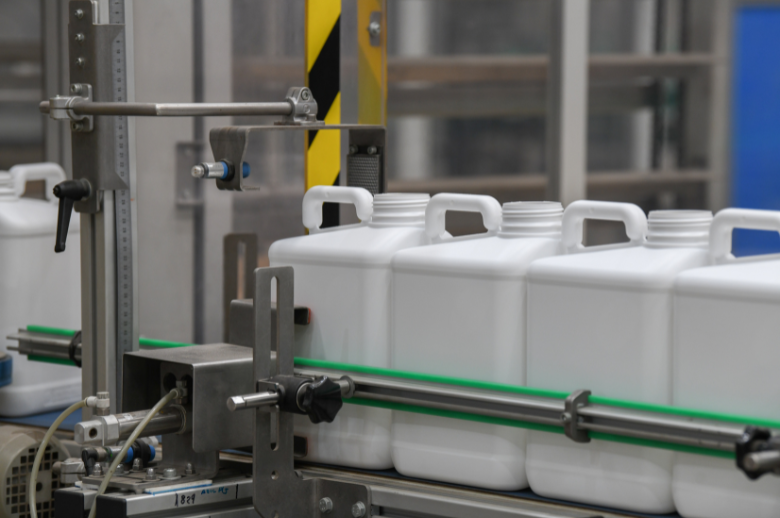
The efficiency of a packing line does not only depend on the speed of the machinery used, but also on the proper integration of the plastic container and all other components within the complete equipment sequence of the line.
Poor container adjustment can lead to failures, delays, or even financial losses, whereas an optimized container helps maximize line performance, ensure product quality, and reduce costs.
We invite you to explore this key topic to help your business reach its full potential.
We will see..
The relationship between the container and the packing line is a strategic factor in productivity, quality, and overall competitiveness in any company.
Choosing an unsuitable container is not a minor issue—it can lead to serious problems such as frequent stoppages, product loss, closure leaks, or difficulties in label application.
Conversely, when companies use an optimized container that fits the packing line, they achieve a continuous workflow with fewer incidents and higher production volumes.
The key lies in understanding that the container is not an isolated component, but a part that must work in perfect harmony with every stage of the industrial process.
Keep learning: Ecodesign in plastic packaging: Key aspects towards circularity
The design of the container directly influences how it behaves within the packing line.
Small variations in dimensions or materials can affect transport along the line, closure performance, and labeling accuracy. For this reason, proper integration must be ensured to guarantee process fluidity, reduce incident rates, and increase overall productivity.
Taking the features of a packing line into account makes it easier to make informed decisions regarding container design and its proper integration into the industrial line.
The stages of a packing line include feeding empty containers, filling, closing, labeling, and final packaging.
Each stage requires the container to meet specific requirements to ensure accuracy and consistency.

A packing line requires machines that can be manual, semi-automatic, or fully automated, depending on product stock needs, marketing requirements, and the type of company, which in turn determines the packaging volume.
The higher the level of automation, the more critical container consistency becomes to prevent errors and technical stoppages.
The efficiency of a packing line is measured by production speed, filling accuracy, and quality control of each unit.
As mentioned earlier, choosing the right container helps achieve these parameters without compromising product safety.
Another key factor for the efficiency and optimization of a packing line is the proper interaction between the container and the closure system:
Keep reading: Caps and closures for industrial plastic packaging: Technical keys for efficient performance
All of this is critical, as an incorrect thread fit or torque can cause leaks, deformations, or sealing failures.
Selecting a proper closure system tailored to the product and the specific transport and packing line requirements is essential to prevent these issues.
Finally, the importance of information and safety labels should not be overlooked.
The design of the container’s surface and its physical characteristics must allow proper adhesion and placement of labels, preventing wrinkles or detachment.
Choosing the right label material ensures correct adhesion and positioning on the packing line, contributing to higher production speed and efficiency.
How can you design a container that is consistent and perfectly adapted to an industrial packing line? Here are the key factors to keep in mind.
Did you know that the shape, tolerances, and stability of a container impact its handling? That’s why it’s essential to design a container specifically adapted to the product’s requirements.
Containers with low stability can tip over, jam conveyors, or complicate filling, leading to economic losses and a poor reputation with customers.
You may also be interested in: Controlling and reducing the plastic container weight: Key to efficiency and sustainability
The plastic material of containers must provide mechanical strength, flexibility, and compatibility with the product to be packaged, ensuring a design suited to the industrial packing line.
Additionally, factors such as wall thickness and impact resistance directly affect line performance.
Containers must be designed with all types of equipment in mind and optimized for use on automated systems, ranging from filling sensors to palletizing robots, as an ill-suited container tends to slow down production.
We now understand that container design and behavior are key factors in optimizing and enhancing the efficiency of the entire industrial packing line. Let’s examine the impact in detail:
At APS, we provide the quality your industry needs to optimize the entire packing line. We develop containers certified according to the highest national and international standards.

At APS, we work closely with our clients to ensure our containers meet the specifications of each packing line, guaranteeing compatibility and efficiency from the very first day of production.
Our technicians, together with the container design team, use state-of-the-art processes to simulate production, meeting mechanical, aesthetic, and sustainability requirements.
Here’s our story: Alcion Packaging Solutions: 80 years of innovation and leadership in the plastic packaging industry
APS’s team provides support throughout the various container-packing line approval tests conducted by the client at their facility, offering expertise in design adjustments and assistance with technical aspects to ensure each container functions optimally on the line.
Don’t stay in doubt… rely on our team!