
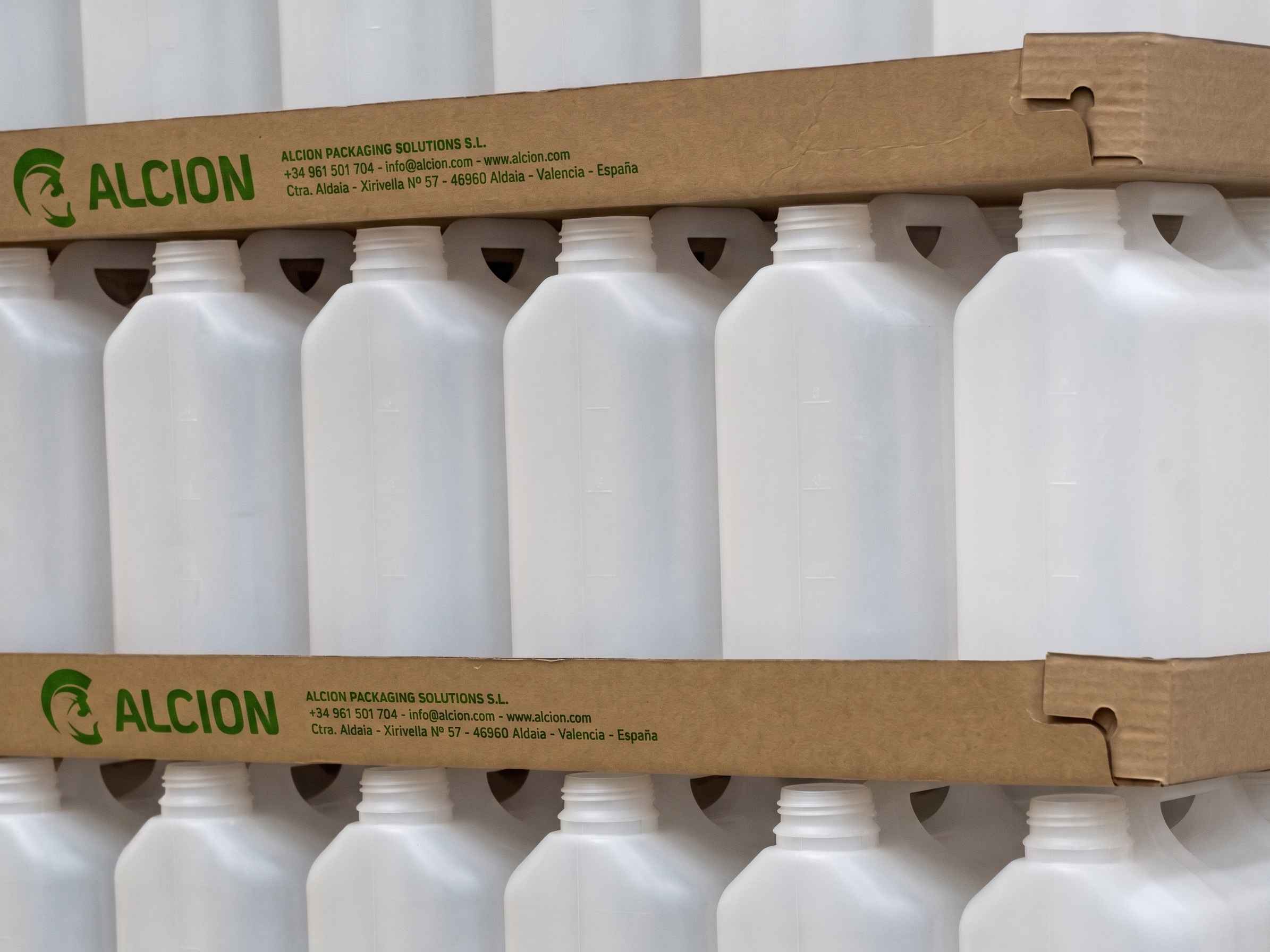
PFAS are synthetic chemicals that have been widely used across many sectors for their specific properties, most notably their resistance to degradation and their ability to repel water, oils and grease.
However, their high persistence in the environment has turned these so-called “forever chemicals” into one of the main focuses of regulatory attention in Europe across many fields, including industrial packaging, where PFAS packaging is increasingly under scrutiny.
As a result, for packaging manufacturers and users, this trend is starting to filter through into technical specifications and purchasing requirements. A growing number of companies are asking their suppliers for PFAS-free solutions as a preventive measure against future restrictions and as part of their sustainability and risk management strategies.
At APS, we are sharing the PFAS Free Project that Delta Engineering is working on, which aims to develop high-barrier containers without resorting to fluorination. In this article, we explain what current legislation says, why alternatives are being sought and which options are available.
CONTENTS
The term “forever chemicals” refers to the high persistence of many PFAS.
In fact, PFAS are a family of thousands of substances with very different chemical properties, historically used in applications as diverse as textiles, firefighting foams, electronics, non-stick surfaces and certain industrial processes.
Their particular chemical structure makes some PFAS extremely resistant to degradation, so they can remain in the environment for long periods and, in some cases, accumulate in the human body.
Precisely because of this persistence and the breadth of their uses, the European Union is developing a specific framework to reduce the risks associated with these substances.
In 2026, the provisions on food contact packaging introduced by the PPWR have already come into force, while ECHA’s scientific committees continue to progress with their opinions. However, this regulatory process does not yet amount to a general ban on all PFAS.

Distinguishing between the different European regulations prevents industrial packaging from being subjected to requirements that currently apply to other applications.
The most significant milestones of Regulation (EU) 2025/40 on packaging and packaging waste, known as the PPWR, began to apply in the European Union on 12 August 2026, although the Regulation itself entered into force in 2025.
One of its provisions sets specific limits for PFAS in packaging intended to come into contact with food:
These limits apply to food contact packaging and do not currently constitute a general ban on PFAS in industrial packaging intended for chemical products.
Nevertheless, the PPWR is a clear signal of the direction European regulation is taking.
The restriction proposal submitted under REACH by Germany, Denmark, the Netherlands, Norway and Sweden covers a wide range of uses and is still under review.
More specifically, the proposal is still being assessed by ECHA’s Committee for Risk Assessment (RAC) and Committee for Socio-Economic Analysis (SEAC), and it has not yet become a general ban applicable to all industrial packaging.
That does not mean the sector can ignore it. On the contrary, the process suggests that requirements on these substances may become more significant in the short term and that companies will need to assess alternative technologies.
You might also be interested in: Key innovations drive modern industry: APS’ 5th Open House
Regulatory developments are not the only factor driving change.
Companies that use packaging are also adding PFAS-related requirements to their purchasing specifications to protect the environment and human health, reflecting greater awareness of the harmful effects of these synthetic chemicals.
Moving towards PFAS-free packaging will allow companies to reduce their exposure to potential regulatory changes and avoid relying on solutions that could be affected by future restrictions.
This forward-looking approach is particularly important in the chemical and industrial sectors, where approving a new container, materials validation and production line adaptations can take several months.
Preparing before an obligation takes effect can therefore make for a gradual transition and avoid regulatory changes forcing modifications at short notice.
The future inclusion of PFAS-free requirements is also linked to companies’ ESG strategies.
The selection of suppliers and materials is increasingly part of environmental and supply chain risk management. In this context, having alternatives that reduce or eliminate the use of fluorinated substances can help lower regulatory, reputational and supply-related risks.
What’s more, a growing number of ESG programmes include targets for reducing persistent substances. In this way, companies can get ahead of a possible legal obligation and build prevention criteria into their purchasing decisions as part of their corporate sustainability.
Some fluorination technologies have been used to make plastic containers more chemical resistant and to give them barrier properties. However, certain processes can generate PFAS unintentionally, which has driven the search for safer alternatives.
This is not only happening in Europe. In the United States, the case of an American packaging manufacturer set an important precedent: the unintentional generation of PFAS during its industrial fluorination process, in which fluorine gas was used to treat its containers. The EPA determined that PFAS could be formed above legally permitted limits during the fluorination of HDPE containers and could then migrate into the contents, posing health risks.
This episode is a clear example of why the sector is looking more closely at alternative technologies that maintain technical performance without relying on processes that could lead to the formation of these forever chemicals.

Against this backdrop, the technological challenge today is to maintain the barrier performance that certain chemical products require without relying on solutions based on fluorine chemistry.
One of the available alternatives is manufacturing with multilayer co-extruded structures, incorporating materials with specific barrier properties, such as EVOH.
This multilayer packaging configuration allows different materials to be combined to meet the requirements of the packaged product and improve protection against certain agents. Its use should be assessed according to the characteristics of the product, the storage conditions and the recyclability requirements of each solution.
Another alternative is plasma coating.
This plasma coating technology creates an extremely thin barrier layer on the inner surface of the container through a process that uses electromagnetic energy under low-pressure conditions.
Alcion Packaging was a pioneer in Spain in the industrial implementation of this technology for plastic containers and received the GoldPack 2024 Award for Best Circular Economy Project for its project to manufacture plastic containers using plasma-generated chemical barrier technology.
The award specifically highlighted the possibility of moving from multi-material multilayer structures to mono-material solutions with barrier properties.
In the current context, the development of plasma treatments that do away with conventional fluorination opens a path towards high-barrier containers with less dependence on PFAS-related technologies.
The PFAS Free Deltas’s Project, which is currently under way and was presented in Spain during ALCION PACKAGING SOLUTIONS’ 5th Open Days, aims to develop industrial packaging solutions that provide the barrier performance required by chemical products without resorting to fluorination processes that may generate PFAS.
To make progress in this area, we are collaborating with Delta Engineering, a specialist in plasma treatment technologies, to analyse the behaviour of our containers and develop fluorine-free barrier solutions.
For industrial companies, acting early means having time to analyse alternatives, carry out trials, approve new containers and adapt production processes where necessary. These are stages that cannot always be completed overnight.
That is why, at Alcion, we work alongside our technology partners to introduce solutions that help the sector move towards industrial packaging that is ready for the demands of the future.
Would you like to explore the different barrier packaging alternatives for your industrial containers? Get in touch with our team and we’ll work with you to find the most suitable solution for your application.

It is not enough to ask the supplier for the product’s Safety Data Sheet (SDS), or for a declaration stating that no PFAS have been intentionally added to the formulation or the process.
The only way to obtain empirical verification is to have the container tested in an accredited laboratory, and only that laboratory analysis of the finished container will determine the exact value in ppb.
No. An HDPE container does not naturally contain PFAS. HDPE polymer is made up solely of ethylene monomers and does not include PFAS or Bisphenol A in its original structure.
Plasma technology creates a barrier layer on the inner surface of the container without introducing fluorine chemistry into the process.
Its main benefits include reduced permeation and the preservation of certain sensitive formulations. It also maintains the mechanical recyclability of the HDPE container, as it is a surface modification involving a very small amount of deposited material.
It is not yet possible to know the final scope of future restrictions. What we do know is that the European Union is moving towards stricter control of PFAS substances.
The PPWR has already introduced specific requirements for food contact packaging from 12 August 2026, and the assessment of a broader restriction under REACH is still under way.
This is why many companies have been analysing alternative technologies for some time, allowing them to maintain the technical performance of their barrier packaging and reduce potential future regulatory risks.
The main function of a barrier is to reduce the permeation of certain compounds through the container wall.
Technologies such as multilayer co-extrusion with EVOH or plasma treatments can achieve high levels of barrier performance without relying on fluorine chemistry, whose PFAS levels generated during the process could keep it off the market.
The choice of one barrier solution over another should always be based on chemical compatibility, permeation and logistics performance tests carried out with the actual formulation. There is therefore no one-size-fits-all technology; each product requires a specific assessment.