

On November 14th, the IV APS’ Open House Days brought together clients, suppliers, and partners in a space dedicated to sharing knowledge, experiences, and a strategic perspective on the current challenges facing the chemical industry in plastic packaging.
This highly significant event for our sector featured professional presentations covering topics ranging from the role of packaging in chemical filling lines to control parameters, critical adjustments, and future projections.
Below, we share a summary of the main topics addressed during this edition.
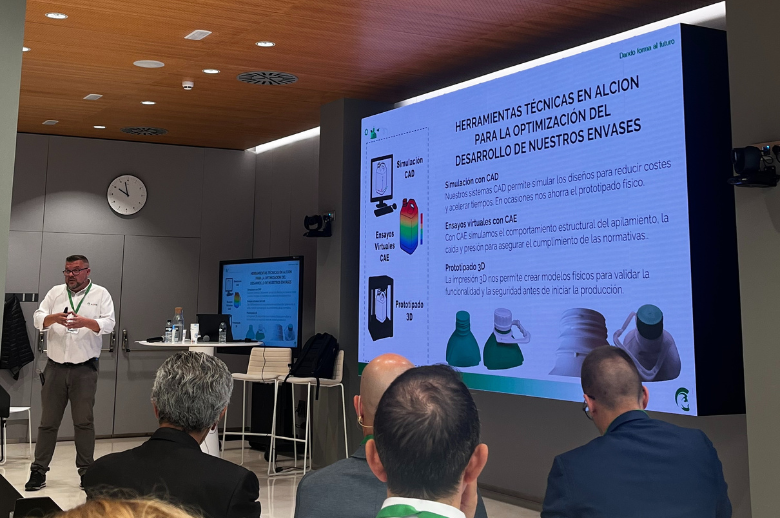
The day began with a presentation dedicated to understanding the role of plastic packaging within a complex production system, such as chemical filling lines.
It was emphasized that packaging is not a passive element but a functional component that directly influences efficiency, safety, and the final product quality.
During the presentation, the key properties determining packaging performance were discussed: chemical resistance, mechanical behavior, compatibility with different formulations, and dimensional stability under temperature variations.
The focus was also placed on how an optimized design can reduce waste, streamline processes, and contribute to sustainability through the use of more efficient and recyclable materials.
Attendees were shown concrete examples of how improvements in packaging engineering generate positive impacts across the entire production chain, from filling to storage and transportation.
In short, a successful chemical filling line requires machinery and packaging to work together. That is where packaging quality lies.
Keep learning: Plastic container and packing line: how to achieve efficient integration

Another central focus of the event was the analysis of adjustment and control parameters that ensure reliable and safe operation in chemical filling lines.
The presentation delved into the need to implement precise control systems to ensure process repeatability, minimize deviations, and optimize production times.
Key topics addressed included:
In addition, real-life cases were presented in which small variations in settings caused significant differences in productivity, highlighting the need for continuous training and constant monitoring to ensure process reliability.
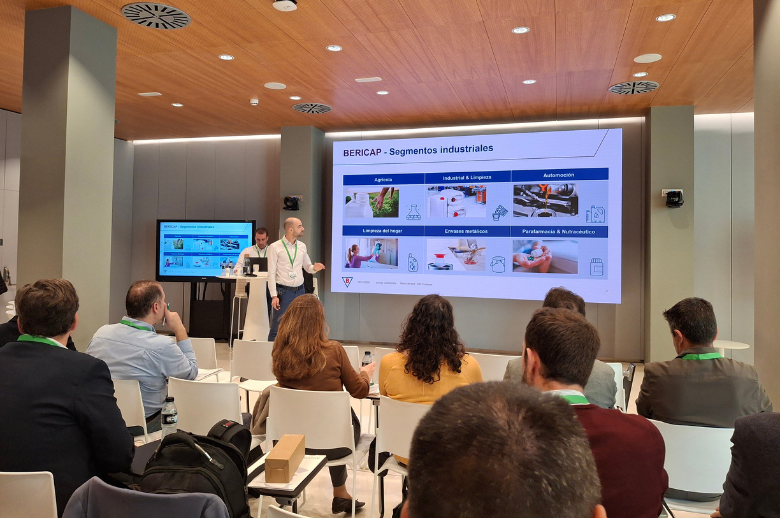
The technical adjustment of caps was another key topic, as it represents a critical point for ensuring the safety of the final product and preventing accidents and significant economic losses.
The presentation explored how cap design, torque, packaging quality, and the compatibility between these elements determine closure performance under real-world conditions.
In addition to explaining the possible variations in materials, geometries, and tolerances and analyzing their effect on sealing, emphasis was placed on the fact that the closure must be an element that adds value to both the packaging and the company.
Best practices for adjusting capping machines were also highlighted, depending on the type of thread and the contents to be packaged, particularly for chemical products that require maximum containment.
The goal is to prevent common issues in applications, such as misalignment.
Keep learning: Caps and closures for industrial plastic packaging: Technical keys for efficient performance

Labeling efficiency was addressed from a comprehensive perspective, linking packaging design, label quality, and machine precision.
The presentation examined the particular challenges of working with chemical product containers, which often have complex surfaces or require specific materials to ensure proper adhesion.
It was emphasized that in the phytosanitary sector, labeling is not merely decorative—it is critical information: warnings, composition, traceability, codes, dates, etc. A single error can entail legal, economic, and safety risks.
As a result, the main parameters to adjust on labeling machines—speed, pressure, alignment, and material tension—were analyzed, along with their impact on the final result.
It was noted that labeling performance largely depends on the packaging itself. Its geometry, material, and surface quality determine whether the label remains stable, legible, and free of defects.
When packaging is well-designed for labeling, line efficiency and profitability are maximized. Therefore, the label must be designed for the packaging and vice versa.
A poor combination can lead to failures, which always result in additional costs. Conversely, a correct selection prevents problems from the outset.
Participants were also shown concrete optimization examples, where a joint review between packaging and machinery suppliers improved product aesthetics, reduced rejects, and increased operational efficiency.
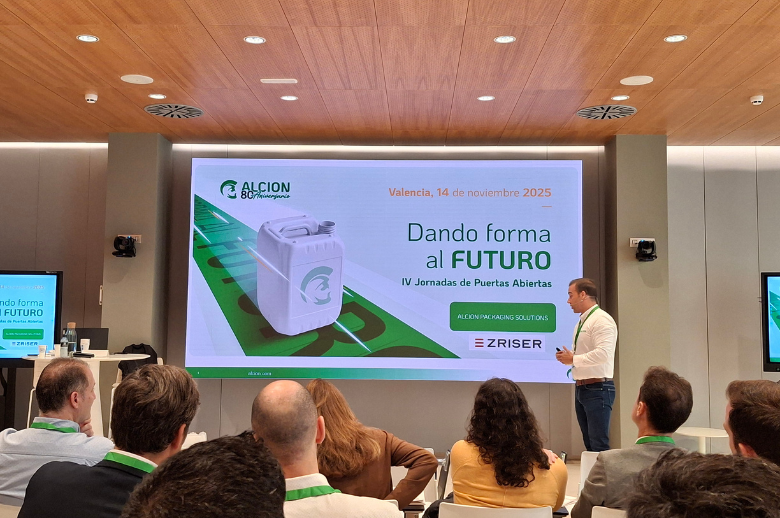
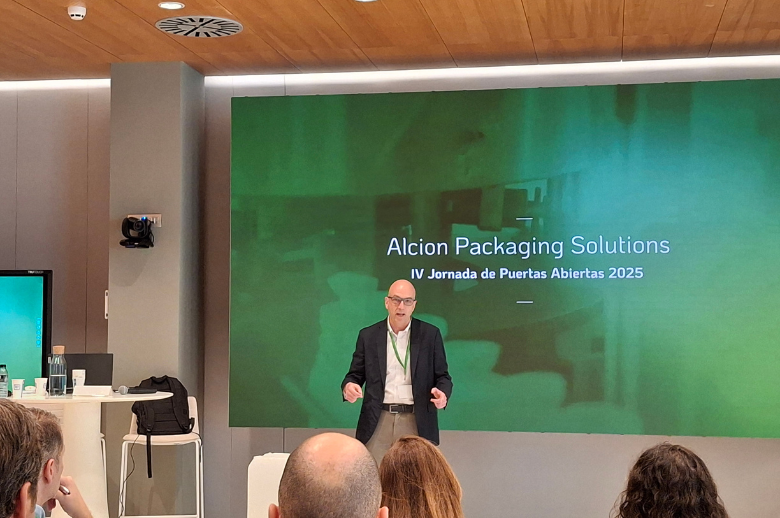
To close the day, the APS team shared with attendees a strategic vision for the company’s future. The improvements implemented over the past year were reviewed, particularly in process innovation, quality, and customer service.
Emphasis was also placed on the progress of internal projects related to technological modernization, automation, and the continuous improvement of production capacity.
At APS, we are committed to growth and innovation. That is why we aim to continue shaping the future through next-generation packaging that prioritizes quality and safety.
Significant developments are on the horizon, which will strengthen our position as a leading provider of packaging solutions for the chemical industry.
We invite you to stay tuned to our social media channels and website to be the first to know about the new challenges we will be working on!